


4 Burner Gas Hobs Are Everywhere. How Can Brands Build a More Competitive Product Line?
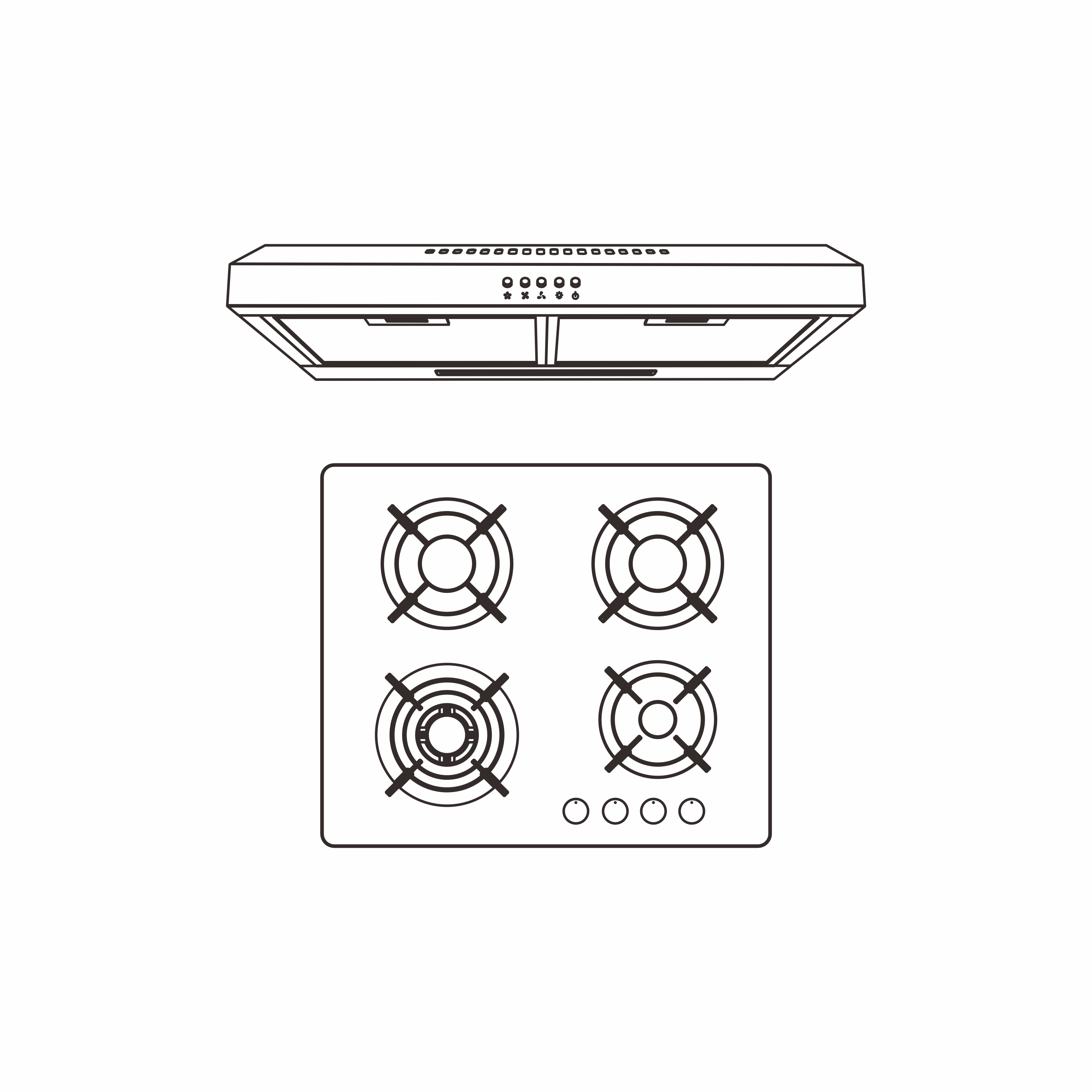
Walk through the gas appliance market in Mexico, Peru, Russia, Central Asia, or other major gas appliance markets, and one product configuration appears again and again: the 4 burner gas hob. It has become a familiar choice for many households and a core product for many appliance brands. But this popularity creates a challenge for brands. More suppliers offer similar burner layouts, sizes, materials, and basic functions. The real question is no longer whether to offer a 4 burner model, but how to make it more competitive, more relevant to the target customer, and more valuable within the brand's overall product line.
Why 4 Burner Gas Hobs Remain a Core Product for Many Brands
For many households, four burners provide a practical balance between cooking capacity, kitchen space, product size, and purchase cost. A 4 burner gas hob can support multiple cooking tasks at the same time without requiring the larger countertop space associated with some 5 or 6 burner configurations. This makes it a practical fit for a wide range of residential kitchens, including apartments and standard-size homes.
Another important advantage for brands is its flexibility across price levels. A basic stainless steel 4 burner gas hob can serve price-sensitive consumers, while cast iron pan supports, upgraded controls, safety functions, and more distinctive designs can be used to create mid-range and premium products. This gives brands a strong foundation for building a broader product line around one familiar configuration.
A Crowded 4 Burner Gas Hob Market Makes Differentiation More Important
The strength of the 4 burner gas hob market is also its biggest challenge. Because the configuration is already well established, brands are competing with products that can look remarkably similar at first glance. The same four burners, similar dimensions, similar stainless steel or glass surfaces, similar knobs, and similar basic functions can make it difficult for buyers to immediately see why one product deserves a higher price or stronger market position than another. This can push brands toward a familiar cycle: Similar Products → More Price Competition → More Promotions → Lower Margins
Lowering the price may help win an individual order, but it does not necessarily build a stronger product line or long-term brand value. For brands looking to move beyond price competition, the more important question is: What makes your 4 burner gas hob worth choosing? The answer needs to come from the product itself.
Where Brands Can Create Real Product Differentiation
A competitive 4 burner gas hob does not need to be radically different from every product in the market. In many cases, meaningful differentiation comes from improving several important details and making sure they work together.
Improve Burner Performance and Configuration
Brands can consider burner power, burner size, flame distribution, combustion efficiency, and the balance between high-power and standard burners. A carefully selected configuration can provide both strong heating for larger cookware and controlled heating for everyday cooking. The goal is to the specification sheet. It is to create a burner configuration that makes sense for the target market and actual cooking habits.
Build Quality Into Everyday Use
Pan support stability, burner durability, ignition reliability, knob quality, panel durability, and safety features all affect how the product performs after repeated daily use. For example, cast iron pan supports can provide a solid cooking platform and contribute to a more substantial product feel, while reliable ignition and Flame Failure Device configurations can support safer and more dependable everyday use. A competitive gas hob should not only look attractive when it is new. It should continue to perform reliably after long-term use.
Create Stronger Product Recognition Through Design
Tempered glass and stainless steel can create different market impressions. Control panel layouts, knob styles, burner arrangements, surface details, and other design elements can also help a product establish a more recognizable identity.
However, design should serve a purpose. A premium-looking product needs to match its target customer and price position, while a mass-market model may need a simpler design that keeps the product practical and cost-efficient. For brands, the goal is not simply to make another gas hob look different. It is to make the product visually and commercially relevant to the market it is targeting.
Balance Product Value With Target Cost
Product differentiation does not mean adding as many features as possible. A more effective approach is to identify which specifications actually matter to the target customer and allocate cost accordingly. Material selection, burner configuration, pan support, control components, appearance, and safety functions all need to work within a defined target cost. A stronger product strategy balances configuration, performance, quality, appearance, and target cost to create a product that offers clear value without entering an unnecessary price war.
Build the Right 4 Burner Gas Hob for the Right Market and Price Segment
A brand should not start with the question, "Which 4 burner gas hob should we manufacture?" A better starting point is, "Who are we selling to, and what does this customer expect from the product?"
Consumer purchasing power, cooking habits, kitchen layouts, preferred appearance, gas type, safety expectations, retail pricing, and competitor positioning can all influence the right configuration.
Brands can also use the 4 burner platform to build different product levels instead of relying on one model to reach every customer.
Entry-level products can focus on practical configurations, reliable basic performance, cost-efficient materials, and competitive pricing.
Mid-range products can introduce upgraded burner performance, improved pan supports, better controls, enhanced safety functions, and a more attractive appearance.
Premium products can focus more heavily on refined design, premium glass or stainless steel surfaces, high-efficiency burners, cast iron supports, upgraded controls, and distinctive product details.
This type of segmentation allows one core product category to serve different customer groups and price levels. It can also give brands more opportunities to expand their product lines without competing solely on price.
A Strong Product Strategy Requires the Right Manufacturing Partner
A clear product strategy is only valuable when a manufacturer can turn it into a reliable market-ready product. For brands, choosing a gas hob supplier should therefore involve more than checking production capacity or requesting a quotation. The manufacturer should understand how market requirements, product configuration, cost, performance, and manufacturing quality connect with each other.
An experienced manufacturing partner needs the market understanding to grasp different customer and product requirements, the configuration expertise to match burners, pan supports, controls with the target positioning, and the manufacturing capability to turn those requirements into stable production. Equally important are consistent quality and performance control across mass production, along with the ability to balance materials, functions, quality and target pricing. For brands, the right supplier is ultimately a partner that can support the product strategy itself.

Market-Specific 4 Burner Gas Hob Solutions for Global Brands
This is where an experienced international gas appliance manufacturer can make a practical difference. Greaidea has extensive experience in gas hob manufacturing and supports overseas brands with OEM and ODM gas hob solutions for different markets and product positions. Its experience covers markets including Mexico, Peru, Russia, Central Asia, Latin America, and other international markets, where product expectations, price levels, and market positioning can vary. Greaidea can provide different configurations according to the brand's target market, customer group, appearance requirements, and target price.
Multiple Configurations for Different Product Positions
Greaidea can support different 4 burner gas hob configurations, including stainless steel and tempered glass models, different burner power combinations, pan support options, knob and control configurations, safety functions, and appearance designs. This gives brands more flexibility to build entry-level, mid-range, and premium product lines around the 4 burner platform.
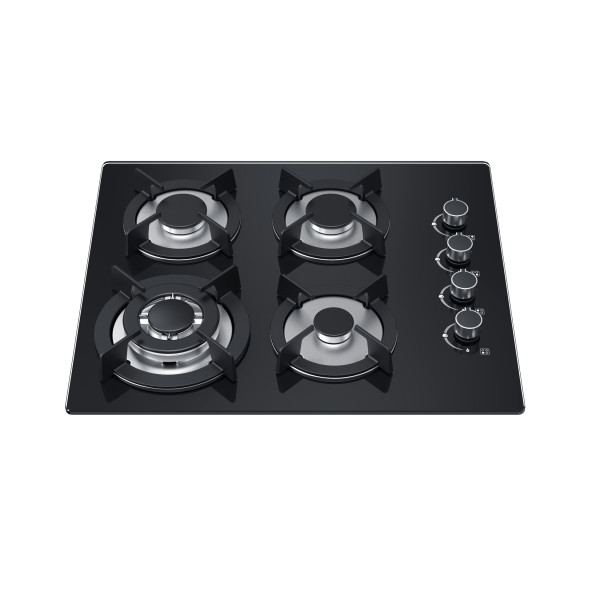
A premium 4 burner glass gas hob with strong performance and reliable quality, offering ODM customization to help brands upgrade their gas hob line and meet different market needs.
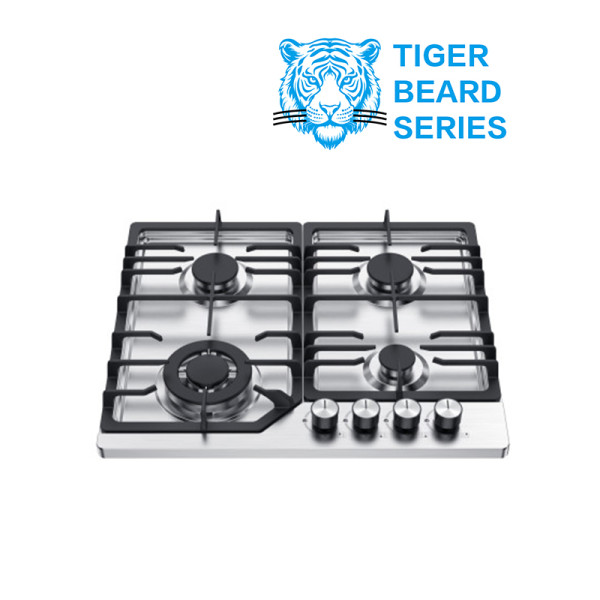
Tiger Beard Series – Newly designed four burner gas hob with high-efficiency burners that stand out in the market.
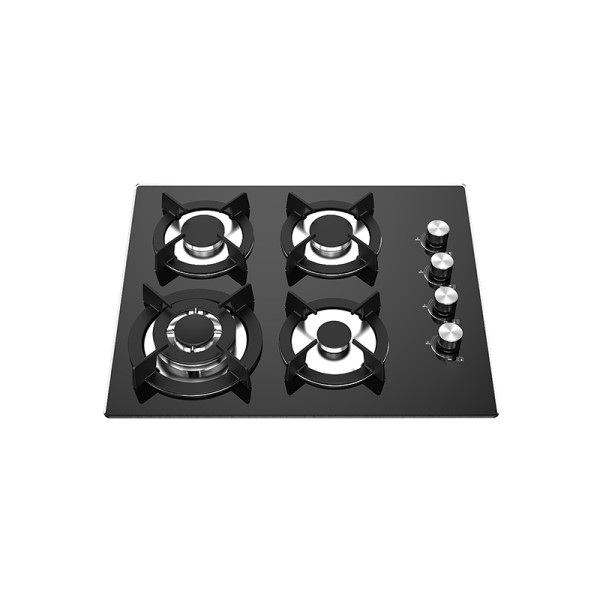
The first choice to enhance your gas hob series, Greaidea provides high-end configurations at competitive prices.
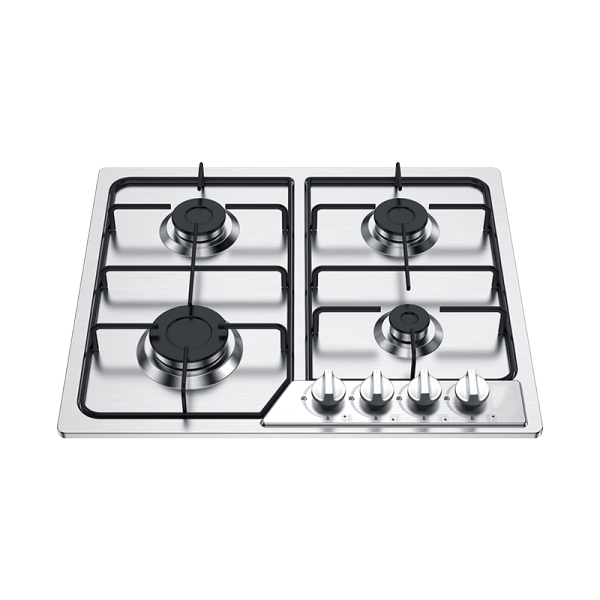
A durable 4-burner stainless steel gas hob with premium features, perfect for expanding mid-range to high-end product line.
Reliable Performance and Manufacturing Quality
Product differentiation only has value when the product can deliver reliable performance in the market. Greaidea focuses on stable combustion, efficient burner performance, reliable ignition, durable components, stable pan support, and consistent manufacturing quality. For brands, this means a product that is designed not only to attract attention at the point of sale, but also to provide dependable performance in everyday use.
OEM & ODM Support for Different Market Requirements
Different brands have different product strategies. Some may need a practical and cost-efficient 4 burner gas hob for a competitive mass-market line, while others may need a more distinctive design and upgraded configuration for a mid-range or premium range. Greaidea provides OEM and ODM support to help brands select and customize suitable gas hob solutions based on their market requirements, product positioning, and target cost.
Build a More Competitive 4 Burner Gas Hob Product Line
The 4 burner gas hob is already a mature and competitive product category. That does not mean there is no room for brands to grow. It means the basis of competition is changing. The opportunity is no longer simply to offer another 4 burner gas hob. It is to build a product that has a clear market position, reliable performance, recognizable design, appropriate quality, and a price that makes sense for its target customer.
For brands looking to strengthen their gas hob product line, the right combination of market understanding, product positioning, manufacturing capability, and OEM/ODM support can turn a familiar 4 burner configuration into a more competitive product opportunity.
Looking to upgrade your 4 burner gas hob product line? Talk to Greaidea about the right configuration, quality level, and OEM/ODM solution for your target market.