


Gas Water Heater Freeze Protection Guide: What Should Brands Know Before Selling Units
As gas water heaters continue to gain popularity across global markets, winter-related damage has quietly become one of the most underestimated risks for brands and distributors. In many regions, temperatures regularly fall below 0℃, and gas water heaters installed outdoors are especially vulnerable. When internal water freezes and expands, it can lead to cracked heat exchangers, damaged valves, and costly after-sales claims.
For brands planning long-term growth, freeze protection is no longer a minor usage detail—it is a product strategy issue that directly affects reliability, reputation, and profitability. This guide outlines practical freeze-prevention measures and product-level solutions to help brands protect performance and reduce winter-related risks.
Root Causes of Freeze Damage in Gas Water Heaters
Freeze damage rarely happens because of extreme cold alone. In most real-world cases, it is the combination of low temperature and residual water inside the system that creates risk. Gas water heaters are commonly installed in balconies, exterior walls, or semi-open utility spaces, especially in markets where indoor space is limited. When ambient temperatures fall below freezing, even small amounts of residual water left inside the heat exchanger, valves, or pipelines can freeze and expand. This expansion creates internal stress that gradually weakens critical components, often leading to micro-cracks that are not immediately visible during installation or early use.
Why Freeze Damage Often Goes Unnoticed Until Failure
What makes freeze damage particularly costly is its delayed nature. Cracks may not appear immediately. Instead, problems often surface weeks later as slow leaks, inconsistent temperature control, or sudden system failure. These issues are difficult to trace, frequently leading to warranty claims and disputes between brands, distributors, and installers —driving up warranty claims, service costs, and customer dissatisfaction for brands and distributors.
A Practical Winter Freeze Protection Guide
For gas water heaters installed in balconies, exterior walls, or semi-open spaces, proper winter preparation is essential. The following steps apply to units equipped with drainage structures and basic freeze-prevention design.
Step 1: Shut Down the System Completely
Turn off the gas supply, close the water inlet valve, and disconnect the power source. This prevents accidental ignition or operation during winter shutdown and ensures the system is safe to service.
Step 2: Release Internal Pressure
Open the hot water outlet to relieve any pressure trapped inside the heater and pipelines. Releasing pressure reduces internal stress and prepares the system for full drainage.
Step 3: Drain All Remaining Water
Drainage is the most critical step in freeze prevention. The drain valve should be opened to remove all remaining water from the tank and internal piping. Special attention should be paid to low points where water may collect. Even small residual amounts can freeze and cause damage. Proper drainage significantly reduces the risk of winter cracking.
Step 4: Confirm Complete Drainage
Visually check that both the water tank and connecting pipes are fully drained. In colder regions, installers often recommend a secondary inspection to ensure no water remains inside the unit.
Complete drainage is the most effective and reliable way to prevent freezing-related failures during winter shutdowns, especially for outdoor-installed gas water heaters.
Why Installation Environment Must Be Considered at the Product Level
Many brands initially treat freeze prevention as a usage instruction rather than a design requirement. In practice, gas water heaters installed outdoors or in semi-open areas are subject to long-term stress on their internal components due to repeated freeze-thaw cycles, humid environments, and cold air flows.components.
When products are not structurally prepared for these environments, even correct user operation may not fully eliminate risk. Over time, this leads to higher failure rates and growing after-sales pressure. As a result, more brands are re-evaluating whether their product configurations truly match the environments in which they are installed.
How Leading Manufacturers Address Winter Risk Through Design
Instead of relying solely on seasonal instructions, experienced manufacturers are integrating freeze prevention into the product itself. This includes optimized internal water paths, reliable drainage structures, and material choices that better tolerate temperature variation. These design considerations do not change how the heater is marketed to end users, but they significantly improve long-term reliability for brands and distributors.
By addressing winter risk at the engineering stage, freeze protection becomes a built-in safeguard rather than a reactive measure. This approach reduces seasonal claims, simplifies market education, and supports stable product performance across colder regions.
A Market-Driven Approach to Winter-Ready Gas Water Heaters
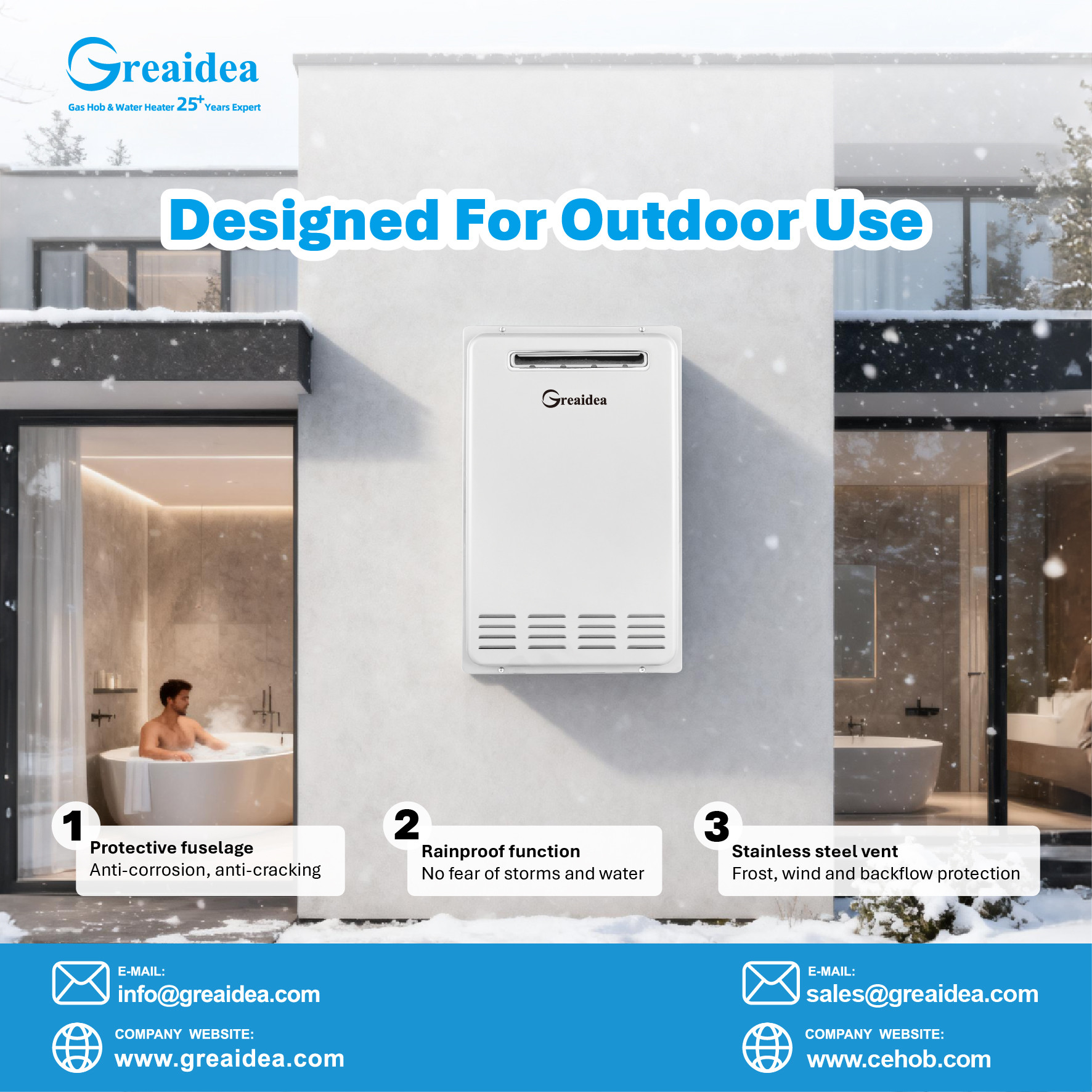
For brands operating in regions with winter temperature fluctuations, working with a manufacturer that understands these challenges is critical. With over 25 years of experience in gas water heater development, Greaidea supports global partners by aligning product structure with real installation environments. Its gas water heater models can be configured with appropriate freeze-prevention solutions and drainage designs, making them suitable for installation in semi-open spaces such as balconies or exterior walls.
Greaidea offers flexible OEM & ODM solutions, supports gas water heater capacity selection, and can customize panels and configurations according to market demands. Many partners report that this market-driven design approach has helped reduce winter-related failures and stabilize after-sales performance, especially in regions where seasonal temperature drops are unavoidable.
Freeze Protection Is a Product Strategy, Not a Seasonal Reminder
For brands selling gas water heaters in cold or fluctuating climates, choosing a manufacturer that understands real installation environments is critical.
Greaidea works with global OEM and ODM partners to develop gas water heater solutions—aligning drainage design, structure, and configuration with market realities. If you’re planning for colder regions or aiming to reduce winter-related claims, discussing product configuration with an experienced manufacturing partner is the smartest first step. Contact Greaidea